A Surge Protector May Look Like Just Another Power Strip but It Also Can
This article is also available every bit a PDF download.
PCs, servers, switches, routers, broadband modems, KVM
switches, and other computer equipment are all subject to electrical harm.
From improper site wiring to lightning strikes, a wide diversity of electric
issues threaten systems and peripherals constantly. Review
these 10 items to ensure that you've taken necessary precautions to help
protect against data loss and equipment harm.
#1: Verify electricity levels
Most computer equipment is designed to use 120 volts of AC
power supplied at lx Hertz. Electrical electric current provided by a local utility or
throughout a site or facility tin can vary from that standard, however, sometimes
significantly.
When deploying new systems, and as facilities are expanded
and adjoining sites grow, be sure the local ability grid continues providing
proper electric baselines. Both sags and surges adversely affect PC and
server electrical components and can lead to subsequent failures and information loss.
Use a multimeter to reveal the voltage an AC power outlet
provides to systems and equipment (Effigy A). If baselines vary by two
percent or less, invest in electrical conditioning equipment, such as an uninterruptible
ability supply (UPS). If baselines vary past three percent or more than, contact the
local utility, a licensed electrical contractor, or facilities management to explore
and right the errors.
| Figure A |
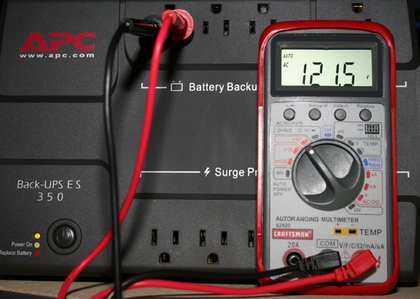 |
| A multimeter reveals a UPS power outlet provides 121.5 volts of Ac electricity. |
#ii: Confirm that supply circuits are grounded properly
Surge protectors and UPS devices can't properly safeguard
the sensitive hardware they're designed to protect if the electric outlets
they're plugged into aren't properly grounded. Footing wiring is responsible for
diverting most power surges. When basis wiring is compromised, surges don't
accept an effective suppression path. Expensive servers, PCs, and network
equipment can later suffer significant damage.
Information technology professionals typically aren't
responsible for a facility's wiring quality, simply as they're responsible for
maintaining the computer systems and networks powered past the facility's
electrical supply, IT pros have an interest in ensuring electrical outlets and
power supplies are properly grounded.
Many UPS and surge protector models will light a alert
lamp if the outlet into which they're plugged isn't properly grounded. Almost
do-it-yourself and hardware stores also sell inexpensive circuit testers (Effigy
B) that are simply plugged into outlets to confirm that circuits are
grounded properly.
| Effigy B |
 |
| A uncomplicated circuit tester tin can rapidly confirm that ability outlets are grounded properly. |
Whenever deploying new equipment, be sure to kickoff exam the
excursion. When using surge protectors or UPS devices that feature improper-grounding
alarms, as well verify that the warning lite isn't lit.
#3: Don't overload circuits
Call back the Christmas
Story scene in which Ralphie's dad blows a fuse connecting likewise many
electrical plugs into a single outlet? In the popular holiday movie, a string
of decorative lights is to blame, but too many desktop computers, servers, and
network devices continued to a single circuit
can hands overpower the electrical supply. Notice I didn't say as well many
desktop computers, servers, and network devices connected to a single outlet.
Splitting outlets (using power strips, surge protectors, and
UPS devices), of course, does nothing but multiply the power demands placed
upon the circuit to which those outlets are connected. Placing excessive
demands upon a circuit can issue in intermittent power failures, wide
variations in available electricity, and even fire hazards as overworked
circuits exceed prophylactic operating ranges.
As CPU speeds and capacities and video card capabilities,
amongst other elements, have increased, server and PC power requirements accept
grown as well. Advisedly research your server room or office'south power
requirements to make sure the site's electricity requirements are sufficient.
Several resource are bachelor for helping estimate
appropriate ability levels. Bank check out these sources for more information:
- Calculating
Total Power Requirements for Data Centers (APC White Newspaper) - Powering
the Data Center Efficiently (Hewlett-Packard White Paper) - System Ability and
Cooling Requirements (Sun Microsystems Book Chapter)
#four: Utilize a UPS/surge protector
Avoid deploying unprotected ability strips, which exercise nothing
to protect connected equipment from sags, surges, and lightning strikes. Deploy
surge protectors and UPS devices instead.
Connect all sensitive electronic equipment to UPS or surge
protection devices. Call up that a laser printer'southward fusers generate strong
bursts of electrical consumption that can damage UPS units.
Mobile systems pose a detail claiming. Ensure that all
traveling employees carry and use effective surge protectors when traveling
with laptops.
#5: Properly calculate UPS/surge protector capacity
Just as electrical circuits tin easily be overwhelmed, so
too can a UPS device's ability capacity exist exceeded. Carefully calculate the
power demands for the systems attached to a UPS device to ensure that the UPS can
power the continued equipment.
Most UPS manufacturers provide interactive calculators you
can use to gauge the volts-amperes and watts required to power your systems.
Utilise these links for more information:
- American
Power Conversion Corp.'southward production selection wizards - Belkin
product selection wizards - Tripp
Lite's product selectors
When selecting surge protectors, purchase models featuring a
sufficient number of protected outlets. A five-outlet surge protector may cover
five devices, but it does no good if additional unprotected outlets must exist
utilized for other systems or peripherals.
Also ensure the surge protector selected includes lightning
protection. Without protection from common thunderstorms, a surge protector can
prove useless in safeguarding sensitive computer equipment from electric
spikes, resulting in failed hardware and corrupt and lost data.
#6: Supplant damaged or faulty UPS/surge protectors
When a surge protector or UPS sustains a pregnant
electric surge, such every bit occurs with a lightning strike, the device's internal
electronics tin can neglect. If alarm lamps calorie-free, outlets finish operating, or
batteries neglect, replace the damaged component or the entire UPS or surge
protection device. You should do this even if the unit's telecommunications
protective machinery is the only component that fails.
Although it's tempting to continue using a UPS with only a
single dead outlet or port, the fact the device sustained an electrical charge
sufficient to damage components indicates that other damage may take occurred.
Such damage could foreclose the UPS or surge protector from properly protecting
connected equipment, thus necessitating the device's replacement.
#7: Protect telecommunication links
Ever make certain that servers, PCs, and network equipment
receive protection from electrical spikes that tin can travel telecommunications
links. Lightning strikes frequently discharge via cable modem, DSL, and
phone lines. The discharge isn't pretty, as everything from network
interface cards to motherboards can be destroyed.
When purchasing UPS and surge protection devices, await for
models that protect continued equipment from lightning strikes inbound the
network via data lines. Then, when deploying the UPS or surge protector, be
certain to connect the information line to the protective device'due south input. Connect a
corresponding RJ-xi or RJ-45 cable to the device's protected output to guard
against lightning damage on your network.
#viii: Test power supplies
Delicate electronic components within a computer, such as
hard disk motors, retentivity, video cards, and motherboards, are sensitive to even
minor fluctuations in a system's electric supply. Even if circuits have been
tested, proper grounding has been verified, and UPS or surge protectors are in
identify, a arrangement's wayward power supply can inflict electric damage on a PC or
server.
Power supplies are a frequent cause of system reboots and
failures. I've seen a power supply (on a organization attached only to a power strip)
continually reboot a machine while in the process of overheating. Thick, acrid
white smoke poured from the malfunctioning power supply while the system kept
repeating vain attempts to restart.
Whenever you encounter unexplained or intermittent reboots
and other flaky behavior, check the power supply's electrical output to ensure
information technology's working properly. Use either a multimeter, set to read the proper
voltages, or a tool specifically designed to test a power supply's output (Effigy
C).
| Figure C |
 |
| Devices such every bit this Vastech ATX 2.0 Power Supply Tester brand testing power supplies easy. |
Malfunctioning power supplies should be replaced immediately
to protect a system's components from electrical harm and potential fire
hazards. If a power supply has been distributing excessive electrical power to
a system, it's not a bad idea to test the motherboard, CPU, memory, and other
components using a Postal service carte du jour to make sure that no boosted repairs are
required.
#ix: Maintain proper operating temperatures
Temperature is a well-known and well-documented enemy of
network switches, firewalls, PCs, servers, and other equipment. High
temperatures tin can adversely bear on power supplies, potentially causing damage to
a system'due south internal components. High temperatures can also prevent a UPS
device's internal electronics from working properly, thereby leaving connected
systems and equipment at risk.
Protect against electric damage resulting from overheating
by ensuring that systems receive proper cooling. Keep all vents and fan outlets
free of debris, boxes, files, folders, and other furniture. When performing
routine system maintenance, verify that PC and server frazzle fans are working
properly and are unobstructed.
I've encountered situations in which a PC's exhaust fans
were blocked by documentation placed inside the system (to preclude the discs
and license numbers from becoming separated from the unit or existence lost). A
skillful idea in theory, but the resultant ventilation loss prompted the hd to
fail as a result of its baking in the heat generated past its own electrical
action.
Take steps to ensure that UPS devices also receive ample
room to breathe. Don't stack boxes, retired PCs, or other equipment alongside
UPSes, either in server rooms or in cubicles.
Electricity use consistently generates heat, and that heat
must be prodigal properly or damage and potential data loss will result. It
sounds simple, but take a quick walk through any part environment and you'll
nearly always discover at least i UPS buried past boxes, files, or other office
material.
#10: Maintain proper insurance
Y'all can take numerous steps to prevent electrical harm to
computers, servers, and other calculating equipment, but sometimes your best
efforts simply aren't sufficient. I've seen clients lose motherboards, NICs,
hard disks, and more due to lightning strikes. Some of the damaged equipment
was even connected to UPS and surge protectors.
Despite precautions, equipment can nevertheless end up existence lost
to electric impairment resulting from surges, lightning, and other disturbances.
Business owners, even those with small operations, should make certain that
insurance policies include riders or passages expressly roofing computers and
associated equipment. IT professionals employed by larger organizations should
also work with their CTOs to properly maintain documentation required by the
corporation'southward insurers.
Review your organisation'due south belongings and prey insurance
policies.
homeowner's policies. Regardless of organization size, you should record the model
numbers, series numbers, and buy prices of all equipment. Also, collect photographs
of all computer and related items. Both the insurance policies and the supporting
documentation should be deeply stored off site. If a devastating electric
crisis does occur, having proper insurance and associated documentation can
help your organization recover much more than quickly and efficiently.
harperalationever.blogspot.com
Source: https://www.techrepublic.com/article/10-ways-to-protect-systems-from-electrical-catastrophes/

Post a Comment for "A Surge Protector May Look Like Just Another Power Strip but It Also Can"